Booking choice: The Chianti wineries tour, from $55 per person. Check dates Tour details
Ask for a glass of red in a Florence trattoria and the odds are it is Chianti. The city has been the market for the wines of the surrounding hills for more than six centuries: the Chianti Classico consortium's own timeline starts with a notarial document of 1398 that names Chianti as a wine, and in 1716 Grand Duke Cosimo III de' Medici drew the boundaries of the production area that is today's Chianti Classico.
This guide walks through the local wine families (Chianti Classico, Chianti and its Florentine subzones, the Super Tuscans, Vernaccia and Vin Santo), the names behind them, the city's own cocktail and what to carry home. For the day trips themselves, our Chianti wine tours guide compares every tour on this site.
The quick answer
Florence is famous for Chianti, and above all Chianti Classico, the Black Rooster wine from the hills between Florence and Siena, made from at least 80% Sangiovese. Close behind come Chianti Rufina and Chianti Colli Fiorentini from the province of Florence, the Super Tuscans such as Antinori's Tignanello, and Vin Santo, the sweet wine of the region.
What wine is Florence famous for?
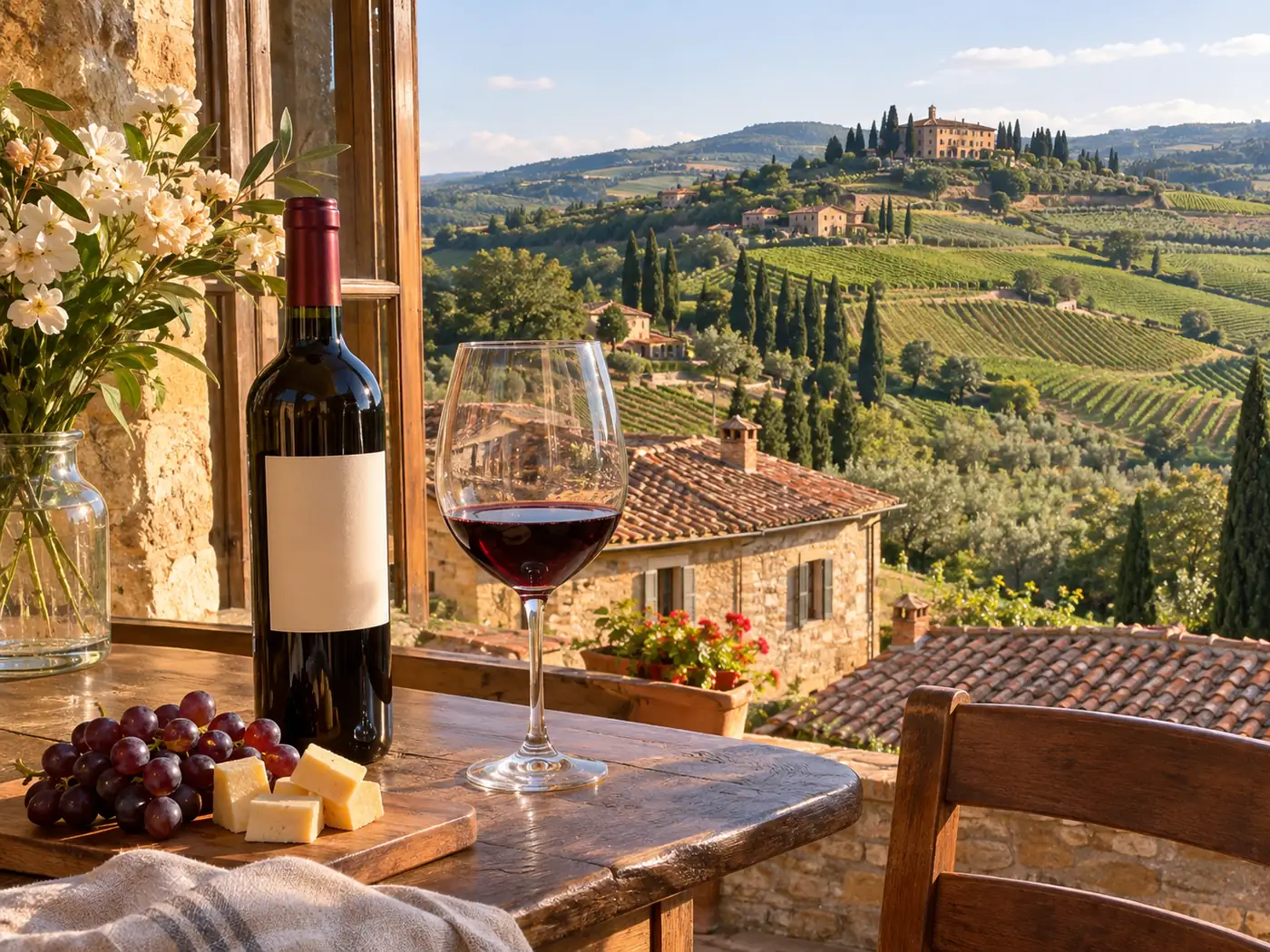
Chianti. The best-known version is Chianti Classico, from the original Chianti area between Florence and Siena, sold with the Black Rooster (Gallo Nero) on the neck.
The Chianti Classico area covers 70,000 hectares across the provinces of Florence and Siena, with about 10,000 hectares of vineyards and 7,200 hectares registered as Chianti Classico, on slopes from 200 to 800 metres, per the consortium's 2024 booklet. The towns read like a list of tour stops: Greve in Chianti, Panzano, Castellina in Chianti, Radda in Chianti, Gaiole in Chianti and San Casciano in Val di Pesa.
The consortium behind the wine is old too. 33 growers founded it in Radda in Chianti on 14 May 1924, the first Italian wine consortium, and took the Black Rooster of the medieval Lega del Chianti as their symbol. Since 2005 the rooster has been the trademark on every bottle of Chianti Classico DOCG.
The plain word "Chianti" on a label is a different wine: Chianti DOCG, made across six Tuscan provinces with its own rules and its own consortium. Our Chianti tours guide sets the two side by side.
What are some good red wines from Florence, Italy?
The local reds are Chianti Classico (Annata, Riserva and Gran Selezione), Chianti Rufina and Chianti Colli Fiorentini, and the Super Tuscans. All of them lean on Sangiovese.
Sangiovese is the grape to know. It is the most planted variety in Italy, with 54,000 hectares or 7.9% of the country's vineyard, per the OIV's 2017 report on grape varieties, and it is the backbone of every wine in this table:
| Wine | Where it comes from | The rule to know |
|---|---|---|
| Chianti Classico | Between Florence and Siena | Min 80% Sangiovese; Annata 12 months, Riserva 24, Gran Selezione 30 |
| Chianti Rufina | Hills east of Florence | A Chianti DOCG subzone in the province of Florence |
| Chianti Colli Fiorentini | Hills around Florence | A Chianti DOCG subzone; min 60% Sangiovese since 2026 |
| Super Tuscans | Across Tuscany | Made outside the classic rules, today mostly sold as Toscana IGT |
| Brunello di Montalcino | Montalcino, south of Siena | 100% Sangiovese, 2 years in oak |
| Vino Nobile di Montepulciano | Montepulciano | Min 70% Sangiovese |
The first four are the Florence wines in the strict sense. Brunello and Vino Nobile come from southern Tuscany, about a day trip away, and appear on every wine list in the city. Our Brunello vs Barolo guide covers them with the other big Italian reds.
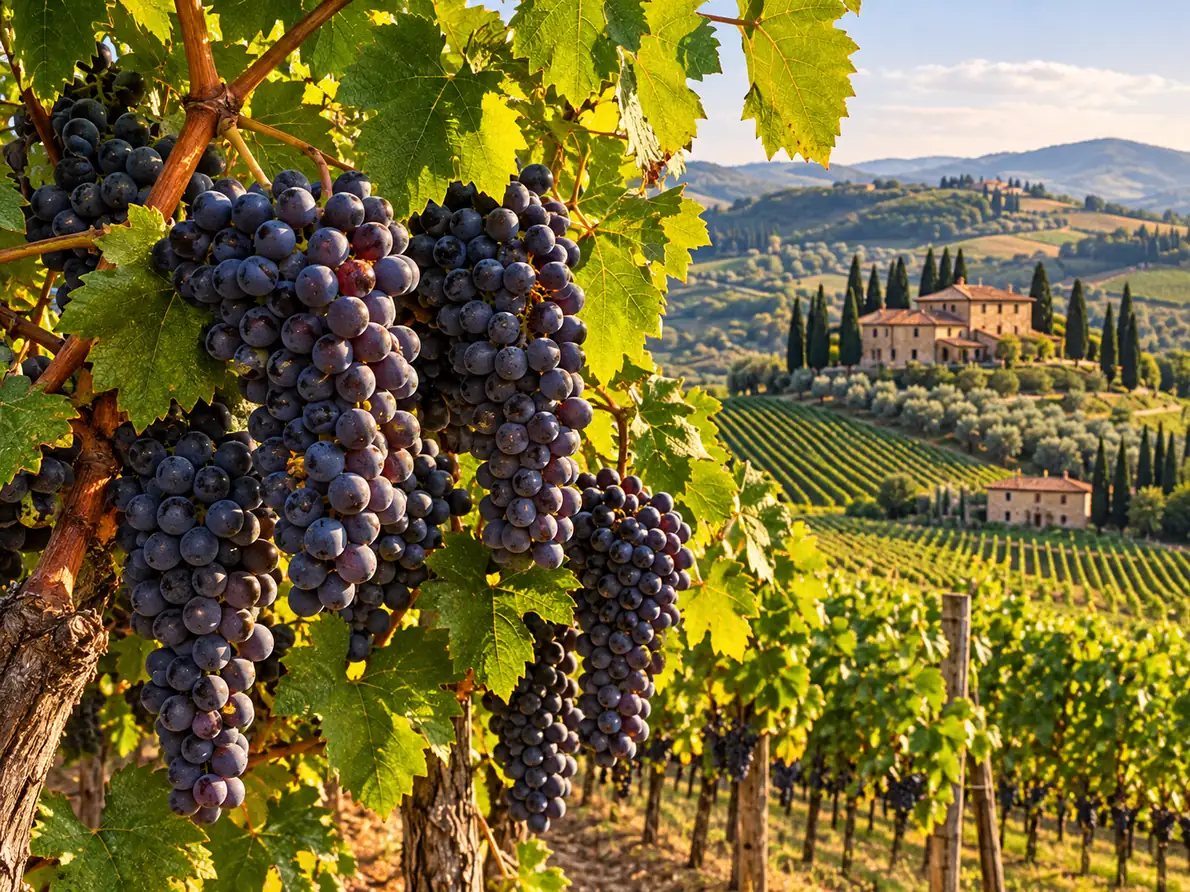
What is the best wine in Florence?
There is no single best one, and no official ranking. The useful question is which style you like, because the local wines range from fresh young Chianti to long-aged Gran Selezione.
A simple way to choose, by taste:
- Fresh and easy with food: a young Chianti or a Chianti Classico Annata, the house red of most trattorias.
- Deeper and more structured: a Chianti Classico Riserva (at least 24 months of ageing) or a Gran Selezione (at least 30 months, from the estate's own grapes).
- Rich and modern: a Super Tuscan, often Sangiovese blended with Cabernet Sauvignon or Merlot.
- White: Vernaccia di San Gimignano, the white of the towers town south-west of Florence.
- Sweet, after dinner: Vin Santo.
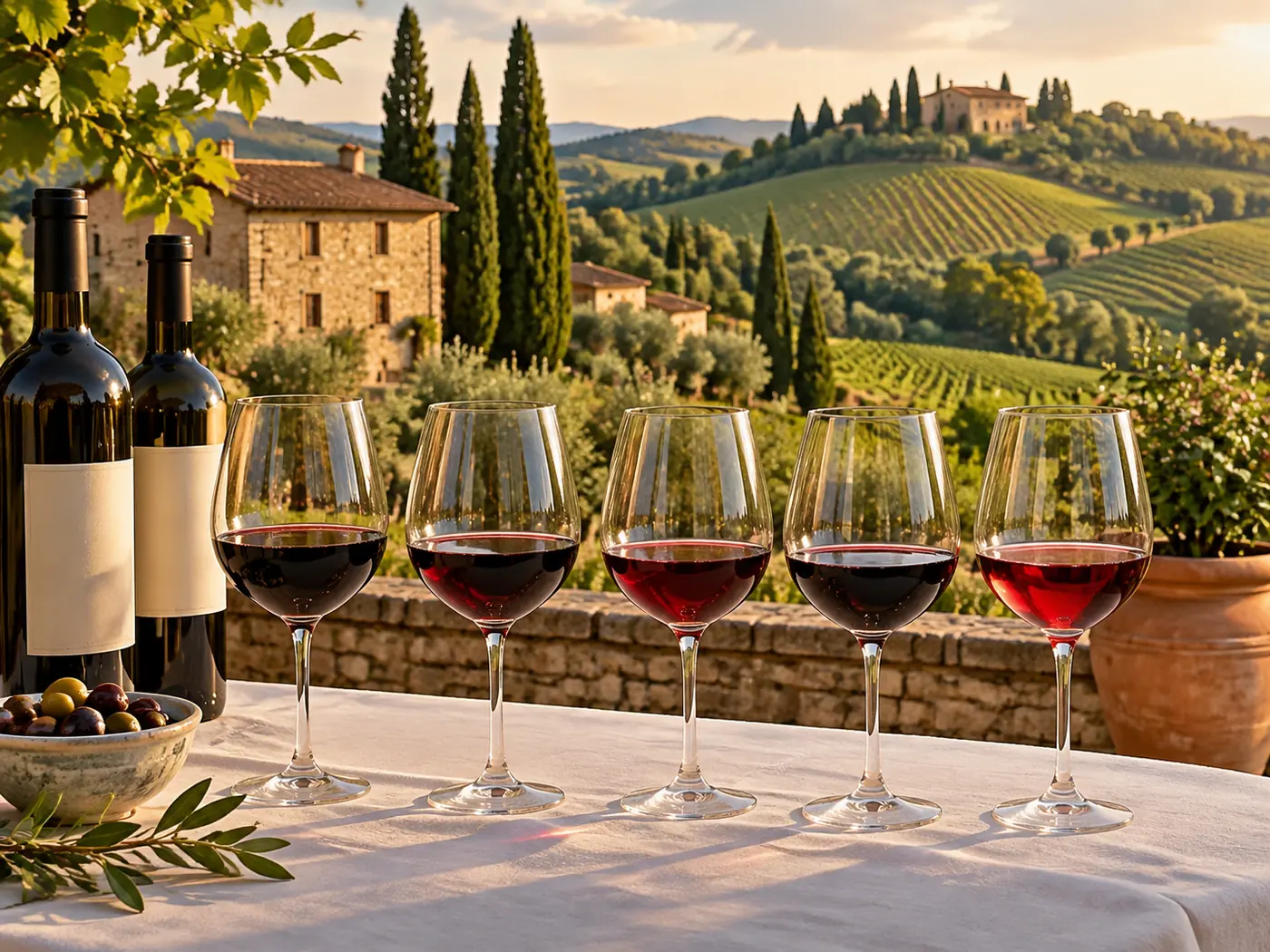
The easiest way to find your style is to taste several side by side. A sommelier tasting in the centre pours 3, 5 or 7 Tuscan wines (the wine cellar tasting), and a Chianti tour pours 3 or 4 at each of two wineries, so you compare producers as well as styles.
Two family wineries in the Chianti hills, three or four wines at each, with Tuscan bread, olive oil and salami on the table.
Check dates for the Chianti wineries tourAre there any vineyards in Florence?
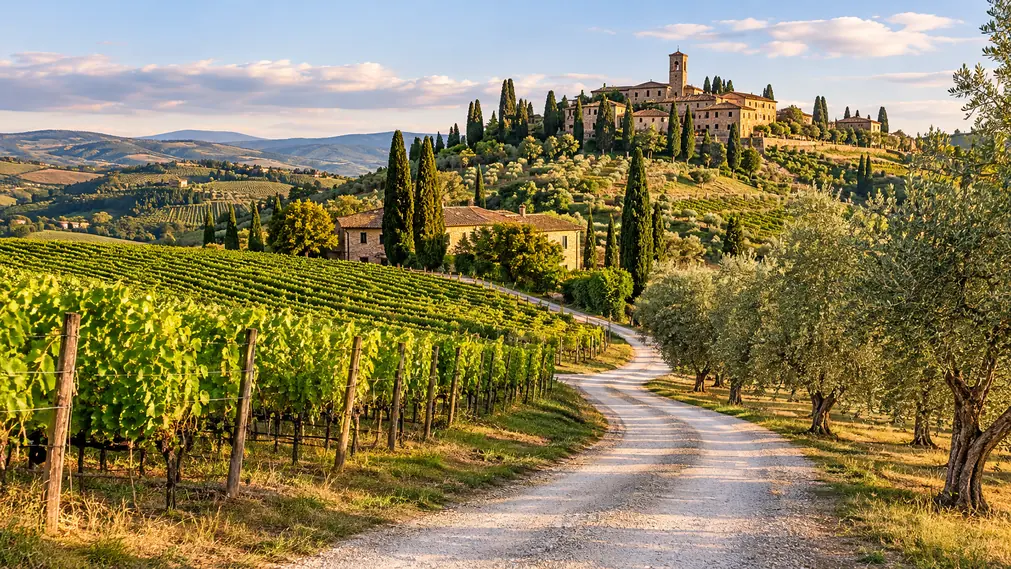
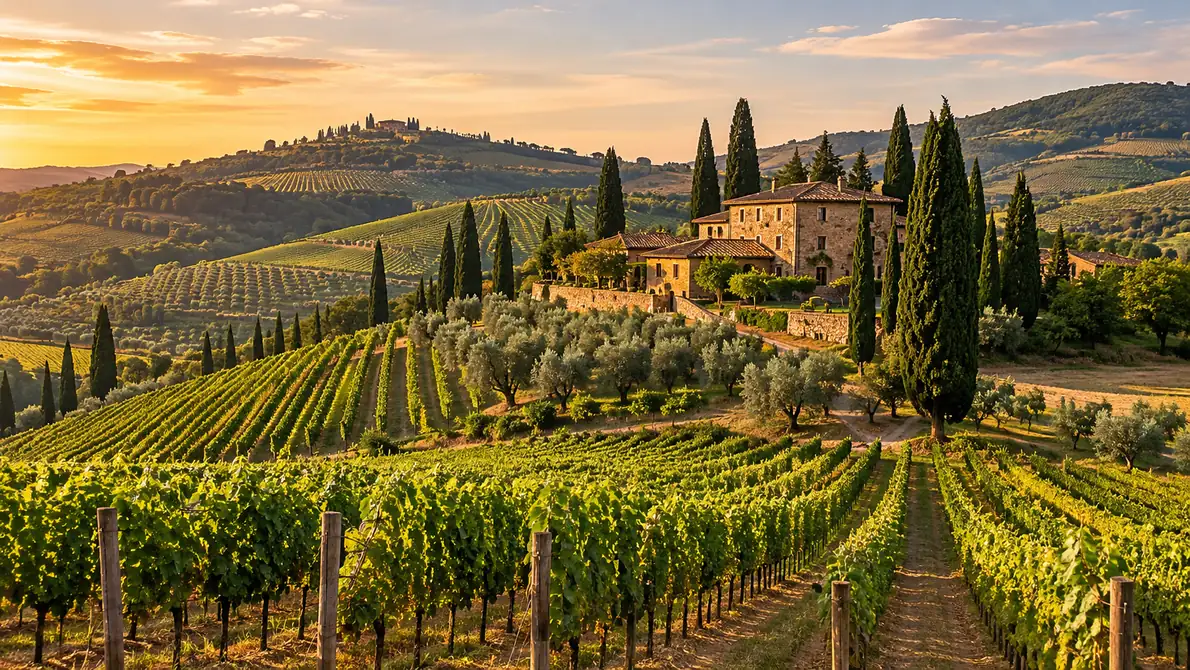
Vineyards start in the hills just outside the city. Within an hour of the centre you are among the Chianti Classico vines, and the Rufina and Colli Fiorentini subzones lie in the province of Florence.
From some of the higher streets and terraces you can see the first olive groves and vine rows on the hills. For a real winery visit, though, you go out of town. The coach tours on this site leave from Piazzale Montelungo, a 5 to 10 minute walk from Santa Maria Novella station, and reach the first winery in about an hour, per the itinerary of the Chianti wineries tour.
One estate shows how close the vineyards are. Antinori nel Chianti Classico, the Antinori family's winery at Bargino in San Casciano in Val di Pesa, opened in October 2012 with a gravity-flow cellar built into the hillside, per antinori.it. It sits in the province of Florence, inside the Chianti Classico area.
If you would rather someone else drives, and you want time in the vines rather than on a coach, the small-group Tuscany wine tour takes a minibus to two estates in 4.5 hours.
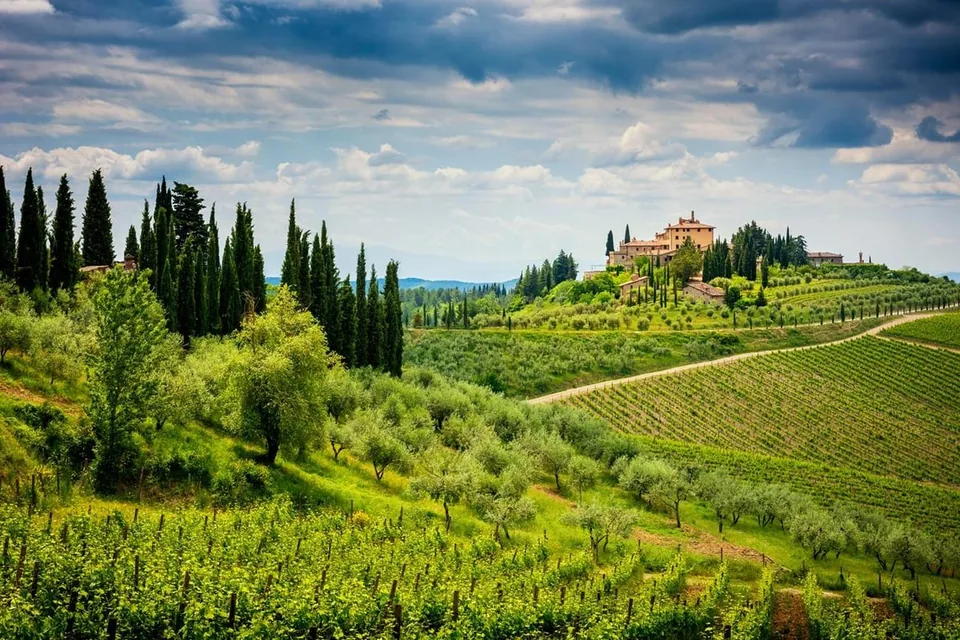
Which families made Florence's wine name?
Two Florentine families stand out in the record: the Antinori, in the wine guild since 1385, and the Frescobaldi, who date their wine history to 1300.
Antinori. Giovanni di Piero Antinori joined the Arte Fiorentina dei Vinattieri, the city's winemakers' guild, in 1385, and the family counts 26 generations since, per antinori.it. In 1506 they bought the palace on what is now Piazza Antinori, and the Cantinetta Antinori on its ground floor has served the family's wines with Tuscan dishes since 1957. Their Tignanello began in 1970 as a Chianti Classico Riserva from a single vineyard, became a Tuscan table wine in 1971, and is today a Toscana IGT, mainly Sangiovese with Cabernet Sauvignon and Cabernet Franc.
Frescobaldi. The family's site speaks of "700 years of wine history". Its estates include Castello Nipozzano in Chianti Rufina, Castello Pomino and Tenuta CastelGiocondo, and the family has owned Ornellaia in Bolgheri outright since 2005.
Tignanello is also the classic example of a Super Tuscan: a wine made outside the old denomination rules from the 1970s on, first sold as plain table wine, with Sassicaia from Bolgheri as the other famous name. Our guide to wine tasting in Florence covers the Cantinetta and the other places to drink in the city.
What is a famous drink in Florence, Italy?
The Negroni. It was first mixed in Florence around 1919 to 1920, according to the usual story, at the Caffè Casoni.
The story, as Visit Tuscany tells it: Count Camillo Negroni was a regular at the Casoni shop, which sold spices and sweets and poured wines and liqueurs, on the corner of Via de' Tornabuoni and Via della Spada. One day he asked his barman, Fosco Scarselli, to add gin to his Americano. Visit Tuscany places it "sometime between 1917 and 1920", and for a while the drink was known as the "Americano alla moda del Conte Negroni". A historian has questioned parts of the tale, including the title of count, but Florence keeps it as its own.
The recipe on Visit Tuscany is equal parts: 30 ml gin, 30 ml Campari and 30 ml red vermouth over ice in a low tumbler, with a slice of orange. Italy has no official national drink, and the Negroni is the one Florence claims.
What white and sweet wines come from around Florence?
Vernaccia di San Gimignano for white, and Vin Santo for sweet. Both turn up on the tours from Florence.
Vernaccia di San Gimignano. A white from the hill town of towers between Florence and Siena. Gambero Rosso calls it "the first DOC in the history of Italian wine": it was recognised on 3 March 1966, and it became a DOCG in 1993. Records of it go back to 1276, and Dante mentions it in the Purgatorio.
Vin Santo. The sweet wine of the region. Vin Santo del Chianti is aged for at least 3 years in small barrels, and the Riserva for at least 4, per the Consorzio Vino Chianti, mostly from the white Malvasia and Trebbiano grapes. A rosé style called Occhio di Pernice is made mainly from Sangiovese.
The Chianti hills half day pours seven wines at one winery, from whites and sparkling to reds and a Vin Santo, after a stop in the winery's vinegar cellar, per the listing. The San Gimignano, Siena and Chianti day gives you about two hours in San Gimignano, the home of Vernaccia.
Seven wines from sparkling to Vin Santo at one Chianti winery, with olive oils and Tuscan snacks, in about five hours.
Check dates for the Chianti hills half dayWhat is a must buy in Florence?
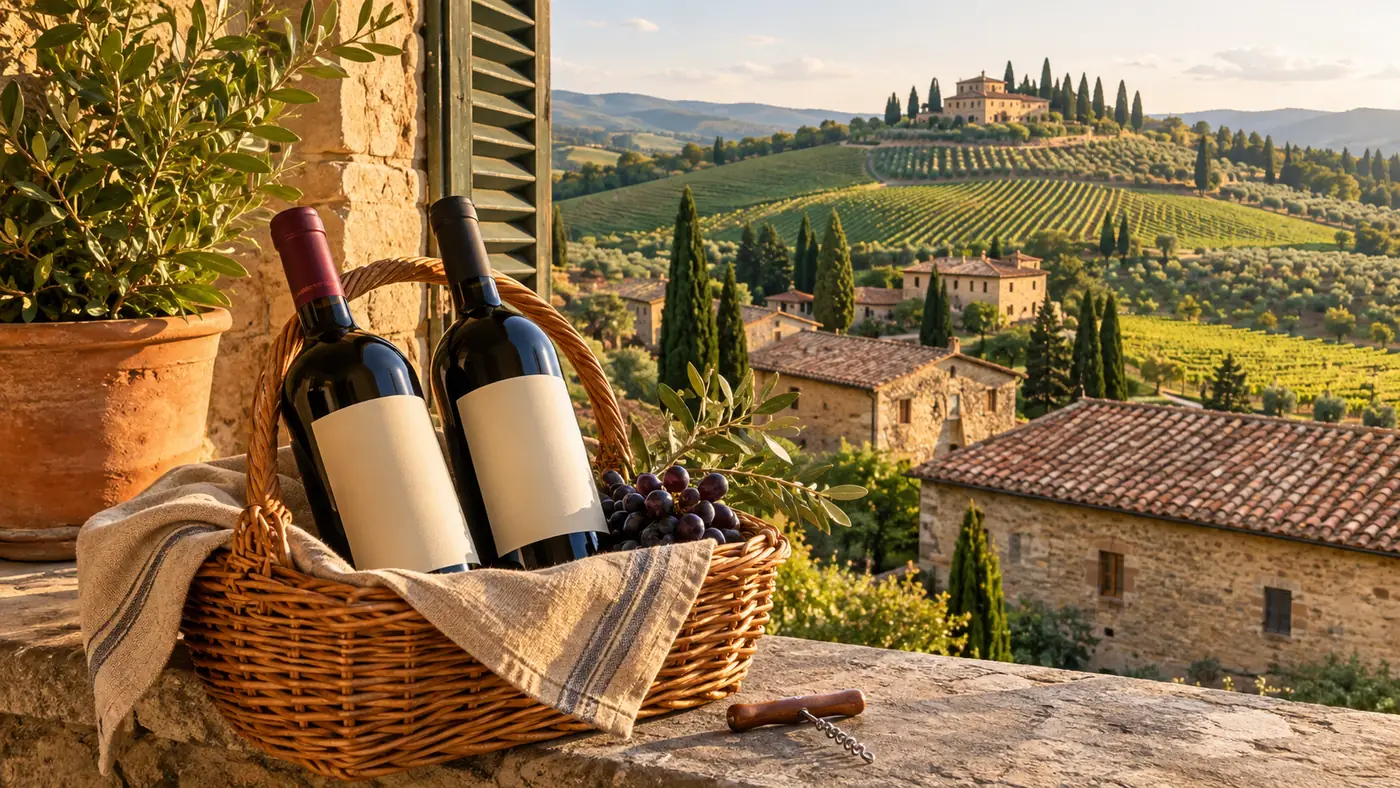
For wine lovers: a bottle of Chianti Classico with the Black Rooster, a Riserva or a Vin Santo, and a bottle of olive oil from a Chianti estate. Most wineries on the tours sell both.
Buying at the winery is part of the day on the Chianti tours: you taste first, then choose. Guests on the small-group tour mention leaving with wine, olive oil and balsamic vinegar. The same estates pour their olive oil at the tasting, so you know what you are buying.
To get the bottles home, pack them in your checked luggage: the 100 ml rule for cabin liquids applies at EU airports, as it does in the US. Allowances on arrival depend on where you fly to, and our Florence wine tips list the US, UK and EU rules. You must be 18 to buy alcohol in Italy, and shops may ask for ID.
★★★★★My husband and I had so much fun on this small-group wine tour. The two Chianti wineries we visited were quite different, and the hosts were exceptional. We received generous pours along with cheese, bread and salami with our tastings. [...] There is an opportunity to purchase wine and other items while visiting - but there is no pressure to do so.
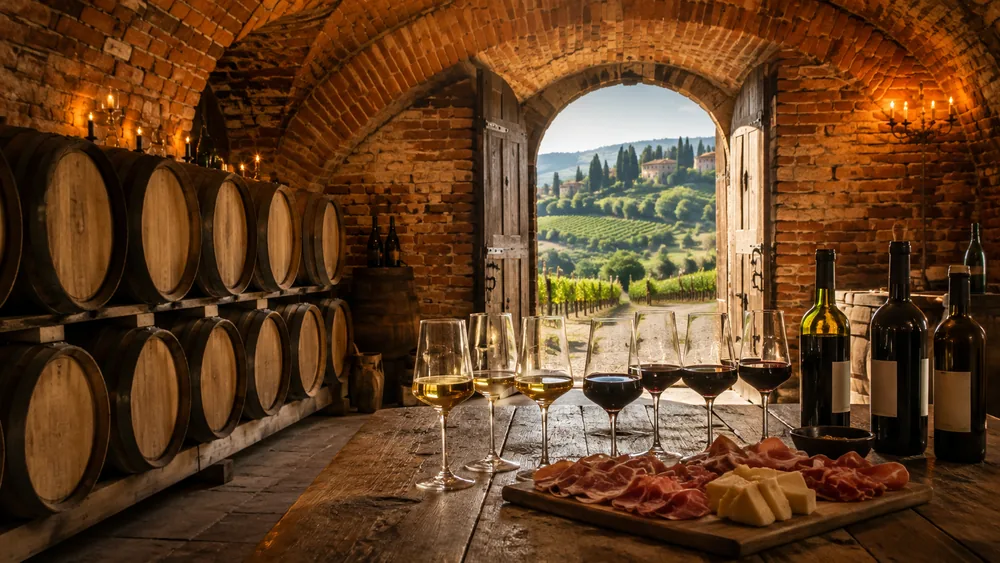
No coach and no early start: a sommelier pours 3, 5 or 7 Tuscan wines in a cellar in central Florence, with prosciutto, salami and pecorino.
Explore the wine cellar tasting in Florence Tour detailsFrequently asked questions
Is Florence good for wine tasting?
Yes. The city has wine bars and cellar tastings in the centre, and the Chianti Classico vineyards begin in the hills between Florence and Siena, so a winery visit fits into half a day.
What is Florence, Italy known for?
For the Renaissance, the Medici and the Duomo, and for wine: Florence is the city of Chianti, and the Medici Grand Duke Cosimo III fixed the Chianti area's boundaries in 1716.
What wine is popular in Florence?
Chianti and Chianti Classico are the everyday reds, poured by the glass in most trattorias and wine bars, with Brunello di Montalcino and the Super Tuscans on most wine lists too.
Does the Black Rooster mean Chianti Classico?
Yes. The Black Rooster (Gallo Nero) is the trademark of Chianti Classico DOCG and appears only on Chianti Classico bottles, not on Chianti DOCG.
Ready to book
Choose your tasting
Free cancellation up to 24 hours before on every option. Prices are from-prices in USD and move with the season.
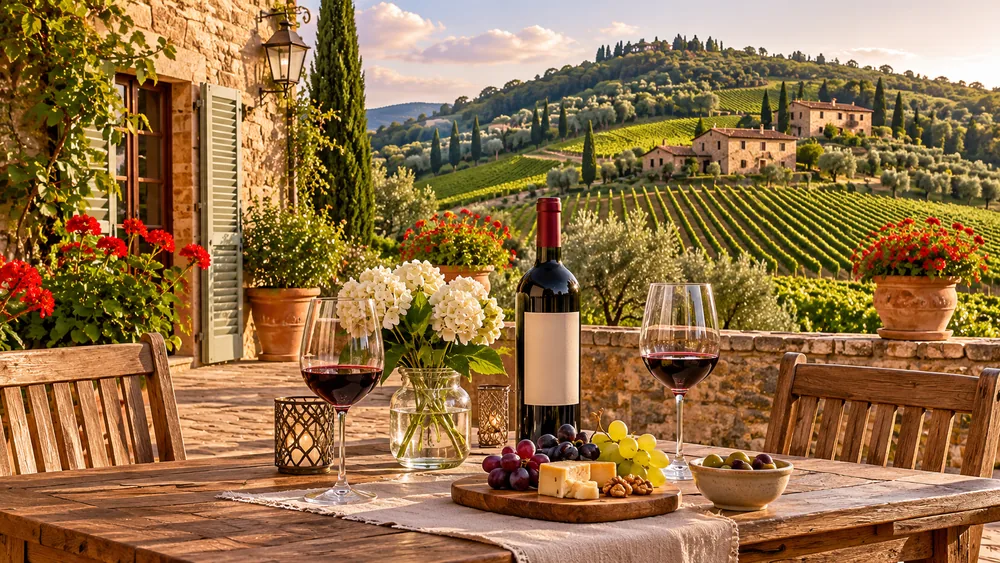
Chianti Wineries Tour with Wine Tasting
- Air-conditioned coach from Florence
- English-speaking tour leader
- Guided tastings at 2 Chianti wineries
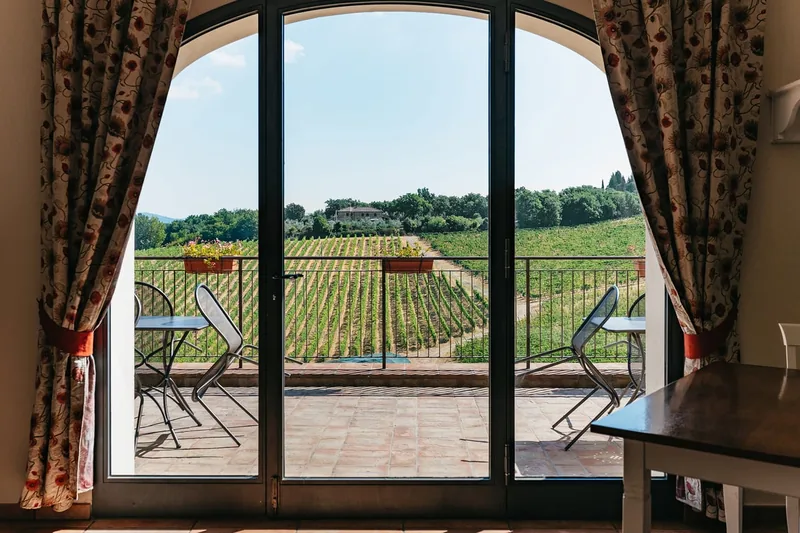
Small-Group Wine Tasting Tour to Tuscany
- Air-conditioned minibus from Florence
- Driver-guide
- Guided visits to 2 wine estates
Wine & Food Tasting in a Florence Wine Cellar
- Sommelier-led tasting of 3, 5 or 7 wines
- Platter of prosciutto, salami and pecorino
- The venue's own olive oil