Booking choice: The 6-wine sommelier tasting, from $67 per person. Check dates Tour details
People ask whether Barolo or Brunello is better the way they ask about football teams. The rules of each appellation give a more useful answer: Brunello is 100% Sangiovese from one Tuscan commune, Barolo is 100% Nebbiolo from 11 communes in Piedmont's Langhe hills, and each has its own minimum time in wood and its own release date.
Below: the two side by side in a table, how to taste them in Florence, the big Italian names people list (Amarone, Chianti Classico, Prosecco, Vino Nobile), the "#1 wine in the world" question, and what Italians actually drink.
The quick answer
Neither is officially better: there is no ranking of Italian wines. Brunello di Montalcino is 100% Sangiovese from Tuscany, aged at least 2 years in oak; Barolo is 100% Nebbiolo from Piedmont, aged at least 38 months with 18 in wood. In Florence you can taste both, with Chianti and Amarone, at a 75-minute sommelier class from $67.
Is Barolo or Brunello better?
Neither, officially. No body ranks Italian wines, and the two are built differently: Barolo is Nebbiolo from Piedmont, Brunello is Sangiovese from Montalcino in Tuscany.
What you can compare is the rulebook. Both became DOC wines in 1966 and DOCG wines in 1980, both are single-grape reds, and both need years in the cellar before release. The details differ:
| Brunello di Montalcino | Barolo | |
|---|---|---|
| Grape | 100% Sangiovese, called "Brunello" locally | 100% Nebbiolo |
| Where | The historic borders of the Comune di Montalcino, province of Siena, Tuscany | 11 communes in the Langhe, province of Cuneo, Piedmont |
| Vineyards | About 2,100 ha (2022) | About 2,057 ha (2021) |
| Minimum ageing | At least 2 years in oak and 4 months in bottle | At least 38 months, 18 of them in wood |
| Earliest sale | 1 January of the fifth year after the harvest | 1 January of the fourth year after the harvest |
| Riserva | 6 months in bottle, released a year later | At least 62 months |
| Minimum alcohol | 12.5% | 13% |
| DOCG since | 1980 (D.P.R. of 1 July 1980) | 1980 (D.P.R. of 1 July 1980) |
Brunello also has a bottle rule: it may be bottled only inside the production area and only in Bordeaux-shaped bottles. The consortium's own example of the release rule: the 2000 vintage could be sold after 1 January 2005.
Which one you prefer is a matter of taste, and the quickest way to find out is to put a glass of each in front of you.
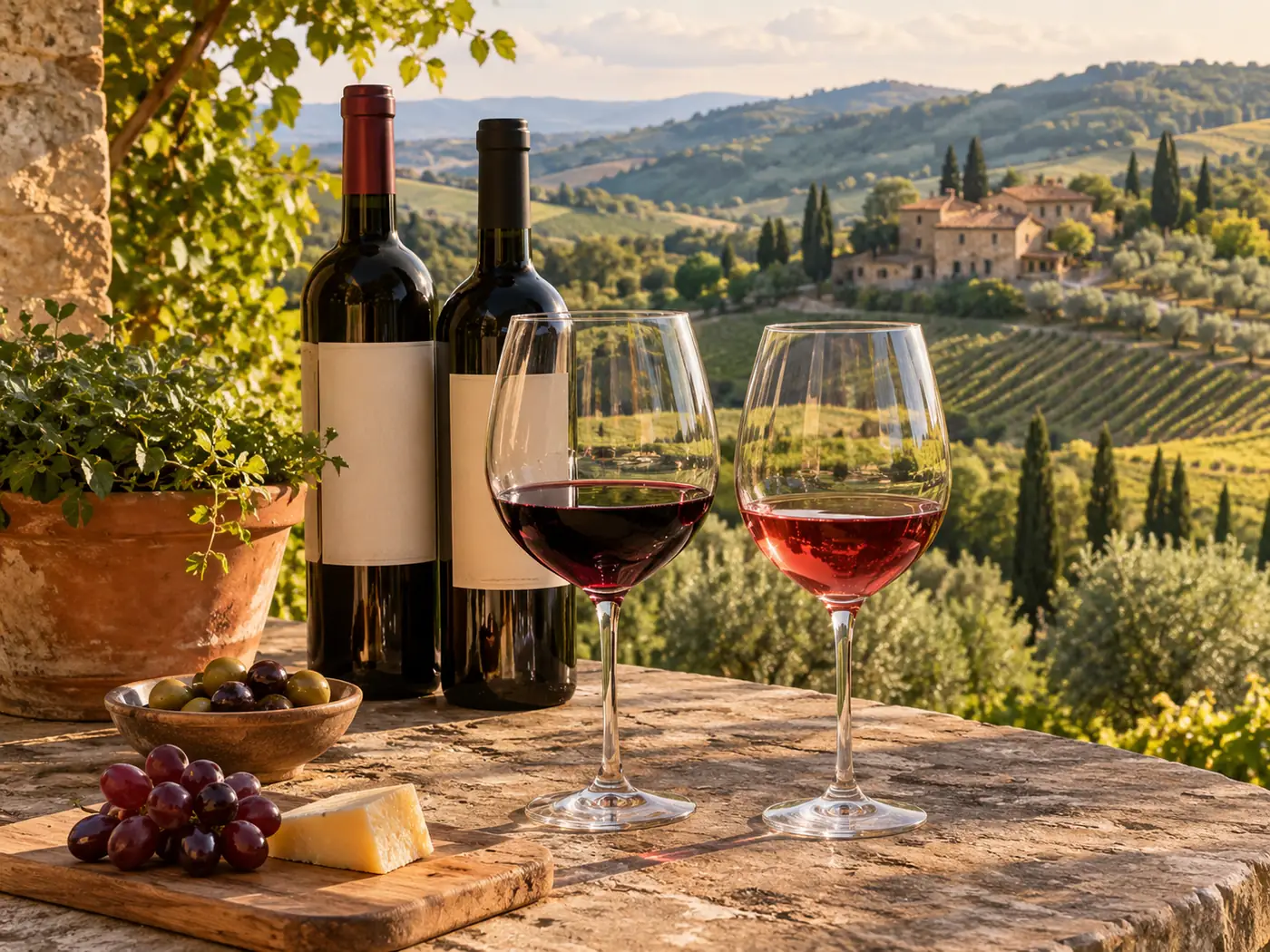
Where can you taste Brunello and Barolo side by side in Florence?
At the 6-wine sommelier class at La Chicca in Sant'Ambrogio: 75 minutes, Chianti and Brunello first, then Amarone and Barolo, with cheeses, olive oils and crostini.
The 6-wine sommelier tasting starts with the basics (how to open a bottle, how to serve it, what to look, smell and taste for), then pours Tuscany's two reds before moving to Piedmont and the Veneto. Six wines in all, per the listing, each with food. It runs daily, for groups of up to 16, adults only (18+), and no wine knowledge is needed. Tell them about allergies when you book.
It is a newer listing with 1 review so far. Neil wrote: "Mario was very knowledgeable regarding the wines that were served. The whole experience was very relaxed and relaxing." (Sep 2026)
Transport to the restaurant and tips are not included. The meeting point is Ristorante La Chicca, Via dei Macci 79 rosso, in the Sant'Ambrogio area.
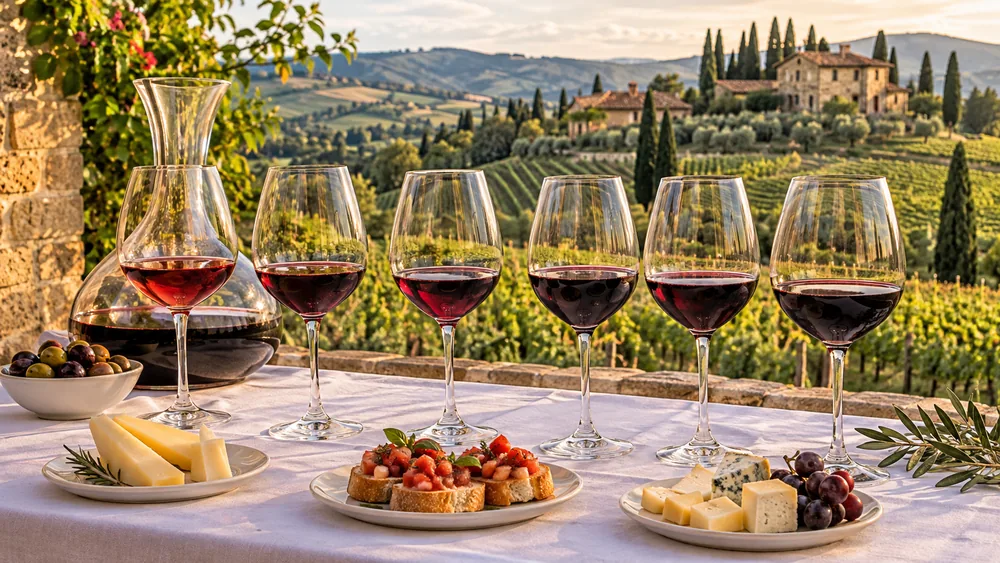
Brunello, Barolo, Amarone and Chianti in one glass-by-glass lesson, without leaving Florence.
Explore the 6-wine sommelier tasting Tour detailsWhat are the big 3 Italian wines?
There is no official list. Barolo, Brunello di Montalcino and Amarone della Valpolicella are the three red DOCG wines most often cited, with Chianti Classico and Prosecco among the best-known names abroad.
Five names cover most "top 3" and "five famous Italian wines" lists. One line on each:
- Barolo (Piedmont): Nebbiolo, aged at least 38 months; 181 additional geographical mentions name its vineyard areas.
- Brunello di Montalcino (Tuscany): Sangiovese from one hill town south of Siena.
- Amarone della Valpolicella (Veneto): Corvina and Corvinone with Rondinella, made from air-dried grapes (appassimento), at least 14% alcohol.
- Chianti Classico (Tuscany): at least 80% Sangiovese from the hills between Florence and Siena, the wine with the Black Rooster on the bottle.
- Prosecco (Veneto and Friuli Venezia Giulia): a sparkling wine from at least 85% Glera.
Two of the five come from the countryside around Florence. Our guide to Florence's own wines explains Chianti, Chianti Classico and the Super Tuscans.
What is Italy's most famous wine?
It depends on how you count. Prosecco is the biggest by volume, Chianti Classico ships to more than 160 countries, and Barolo's own consortium calls it "the king of Italian wine".
A few numbers that people mean when they say "famous":
- Volume: Prosecco DOC made 4.62 million hectolitres in 2023, and 81% of it was exported.
- Reach: Chianti Classico produces 35 to 38 million bottles a year (10-year average) and exports to more than 160 countries (2022), per its consortium.
- The grape: Sangiovese is Italy's most planted variety, 54,000 ha or 7.9% of the national vineyard (OIV, 2015 data). It is the grape of Chianti, Brunello and Vino Nobile.
- The nickname: "the king of Italian wine" is the Barolo consortium's own tagline, not a ranking.
"Finest" has no official answer either. Quality grades in Italy are about rules (DOC, DOCG, Riserva), not about one wine beating another.
Chianti Classico at the source: two family wineries in the hills, 3 to 4 wines at each, by coach from Florence.
Check dates for the Chianti wineries tourWhere is the best wine in Italy, and what is the best red?
No ranking exists, but the best-known reds come from three regions: Piedmont (Barolo), Tuscany (Chianti Classico, Brunello, Vino Nobile) and the Veneto (Amarone).
Italy made 44.4 million hectolitres of wine in 2025, about 20% of the world's output, which makes it the world's No.1 producer per the OIV, and "the best" is a personal call.
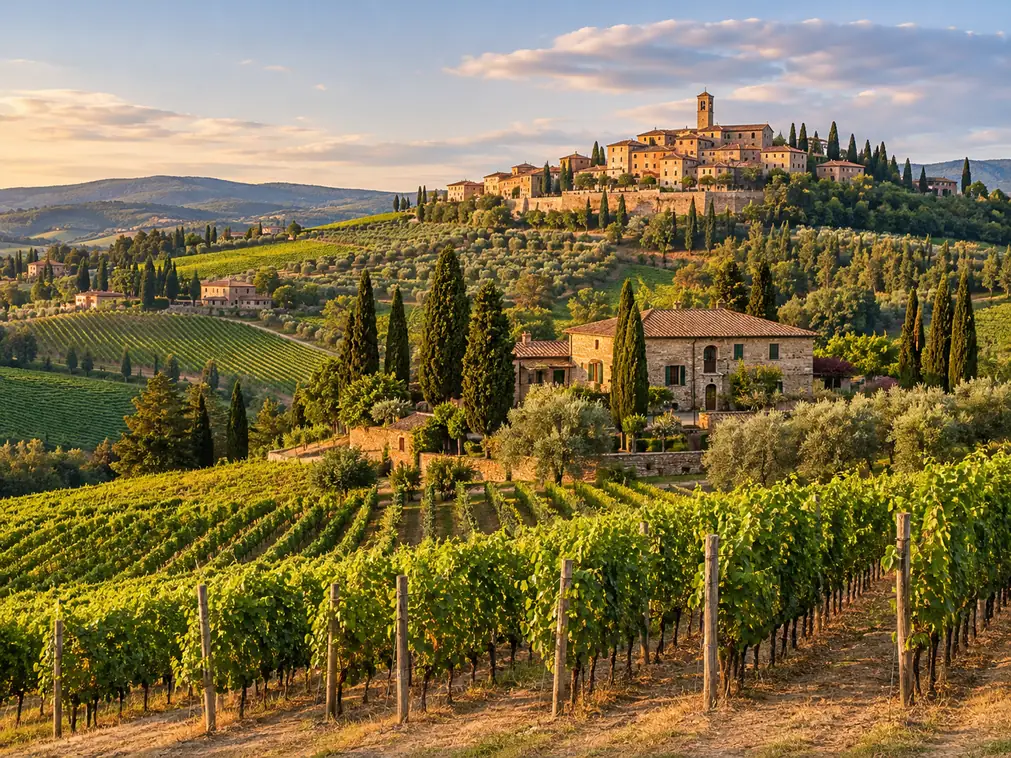
From Florence, the Tuscan names are the easy ones to reach. Chianti Classico begins in the hills between Florence and Siena. Montalcino and Montepulciano sit further south, around the Val d'Orcia, and a full-day trip covers both. Barolo and Amarone are a long way off, so a city tasting is the practical way to try them.
What is the difference between Brunello di Montalcino and Vino Nobile di Montepulciano?
Both are Sangiovese-based reds from neighbouring hill towns. Brunello must be 100% Sangiovese; Vino Nobile needs at least 70%, with other red grapes allowed.
Vino Nobile ages at least 2 years from 1 January after the harvest, and its Riserva at least 3 years. A new top level, Vino Nobile di Montepulciano Pieve, asks for at least 85% Sangiovese, vineyards at least 15 years old and 3 years of ageing; its first vintage, 2021, went on sale from 1 January 2025. Both towns also make a younger wine: Rosso di Montalcino, released from 1 September after the harvest, and Rosso di Montepulciano.
The Brunello and Montepulciano day tastes both at the source: a family-run winery in Montalcino, a 3-course lunch in Pienza, then the historic cellar the listing calls the "underground city" in Montepulciano, with wine, olive oil and local food. A driver takes you by van (the driver is not a guide; sommeliers or winemakers lead the tastings). Rebecca: "We had a wonderful day visiting the wineries, with a lunch stop in Pienza." (Oct 2026)
Montalcino hosts Benvenuto Brunello from 19 to 23 November 2026, where the consortium presents the vintage released in January 2027. Our Benvenuto Brunello 2026 note has the details.
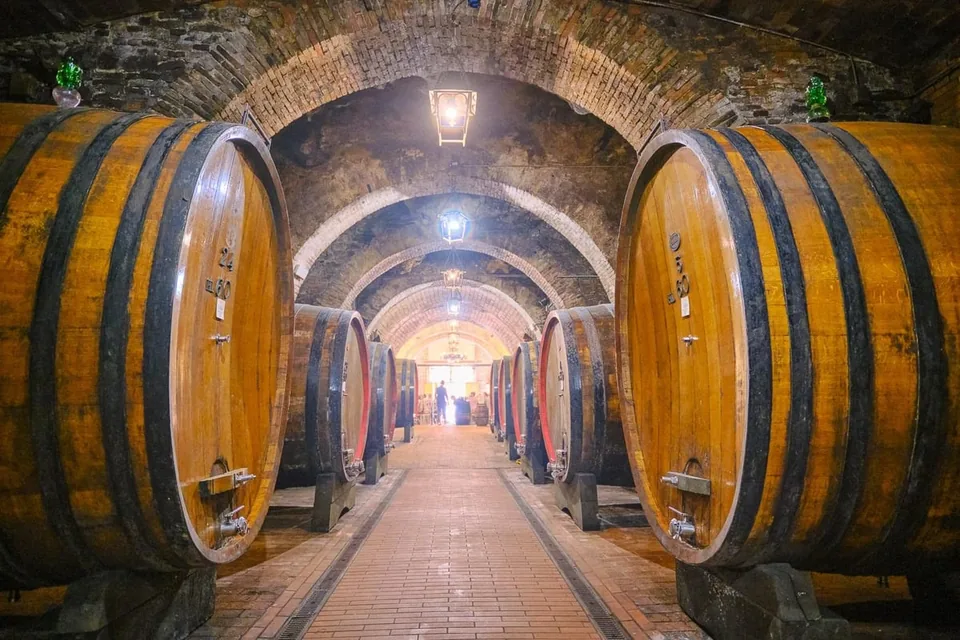
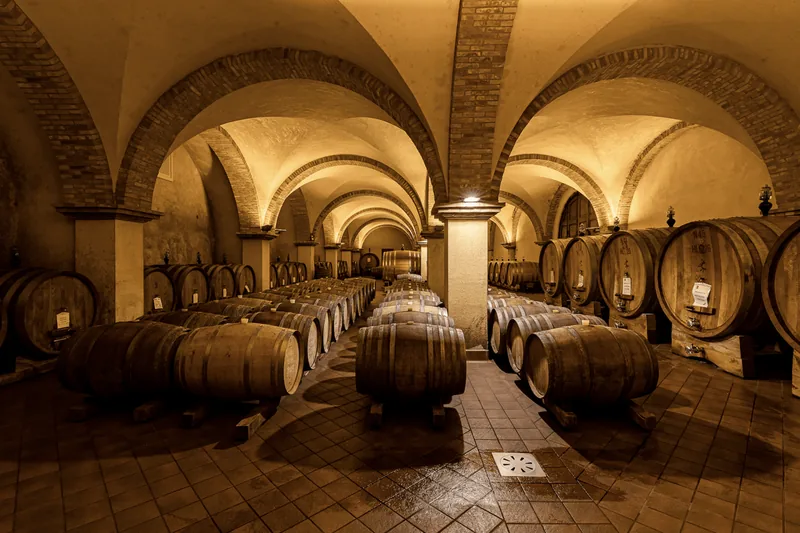
Brunello in Montalcino, lunch in Pienza and Vino Nobile under Montepulciano, in one day from Florence.
Explore the Brunello and Montepulciano day Tour detailsWhat is the #1 wine in the world?
There is no single No.1. By vineyard area, Cabernet Sauvignon is the most planted wine grape (341,000 ha, OIV). By critics' lists, the No.1 changes every year.
Wine Spectator names a "Wine of the Year" at the top of its Top 100 each November. Recent winners include two Tuscan reds:
| Year | Wine Spectator No.1 | From |
|---|---|---|
| 2018 | Tenuta San Guido Sassicaia 2015 (Bolgheri) | Tuscany |
| 2023 | Argiano Brunello di Montalcino 2018 | Tuscany |
| 2024 | Don Melchor 2021 | Chile |
| 2025 | Château Giscours Margaux 2022 | Bordeaux |
The 2025 list held 10 Tuscan wines; the highest was Castello di Ama Chianti Classico San Lorenzo Gran Selezione 2021 at No.9. The 2026 list had not been published on 4 November 2026.
By planted area the OIV's figures (2015 data) put Kyoho, a table grape, first among all varieties, then Cabernet Sauvignon, Sultanina, Merlot, Tempranillo, Airen and Chardonnay.
What wine do Italians drink most, and what is Italy's national drink?
Italy has no official national drink. It is the world's third-largest wine consumer, 20.2 million hectolitres in 2025, after the USA and France.
ISTAT figures quoted in the Ministry of Health's 2025 report say 66.6% of the population drank at least one alcoholic drink in 2024, and WineNews, reporting ISTAT's annual report in May 2025, wrote that wine is "no longer the main drink at meals", with beer and spirits growing.
The drink most tied to Florence is a cocktail. The usual story places the Negroni here, around 1919 to 1920, at Caffè Casoni: Count Camillo Negroni asked his barman Fosco Scarselli to add gin to his Americano, per Visit Tuscany. Our Florence wine guide tells the rest.
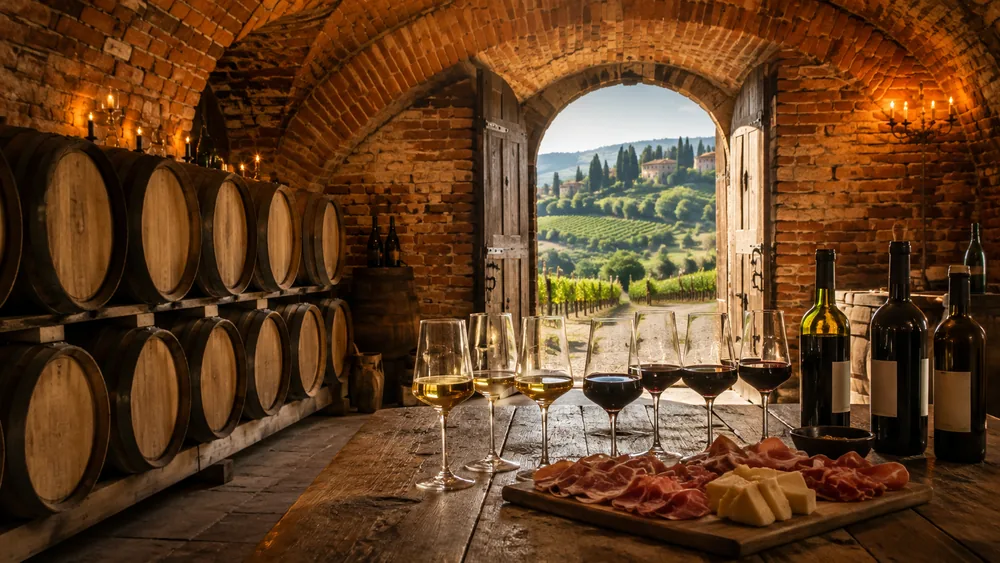
Three, five or seven Tuscan wines with a sommelier in a Florence cellar, 1 to 1.5 hours.
Check dates for the wine cellar tasting in FlorenceFrequently asked questions
Is Brunello di Montalcino made from Sangiovese?
Yes, 100% Sangiovese, which is called "Brunello" in Montalcino. It must age at least 2 years in oak and 4 months in bottle, per the consortium.
When does the next Brunello go on sale?
Brunello can be sold from 1 January of the fifth year after the harvest, so the 2022 vintage goes on sale from 1 January 2027.
Can I taste Barolo in Florence?
Yes. The 6-wine sommelier tasting in Sant'Ambrogio pours Barolo alongside Chianti, Brunello di Montalcino and Amarone, with cheeses, olive oils and crostini.
Is Barolo from Tuscany?
No. Barolo is made from Nebbiolo in 11 communes of the Langhe, in Piedmont. Tuscany's equivalent in fame is Brunello di Montalcino.
Ready to book
Choose your tasting
Free cancellation up to 24 hours before on every option. Prices are from-prices in USD and move with the season.
6-Wine Tasting with Brunello, Barolo & Amarone
Italy's big reds side by side, without leaving Florence
Val d’Orcia Wine Tour: Brunello, Montalcino & Montepulciano
Brunello and Vino Nobile at the source, with lunch
Wine & Food Tasting in a Florence Wine Cellar
- Sommelier-led tasting of 3, 5 or 7 wines
- Platter of prosciutto, salami and pecorino
- The venue's own olive oil