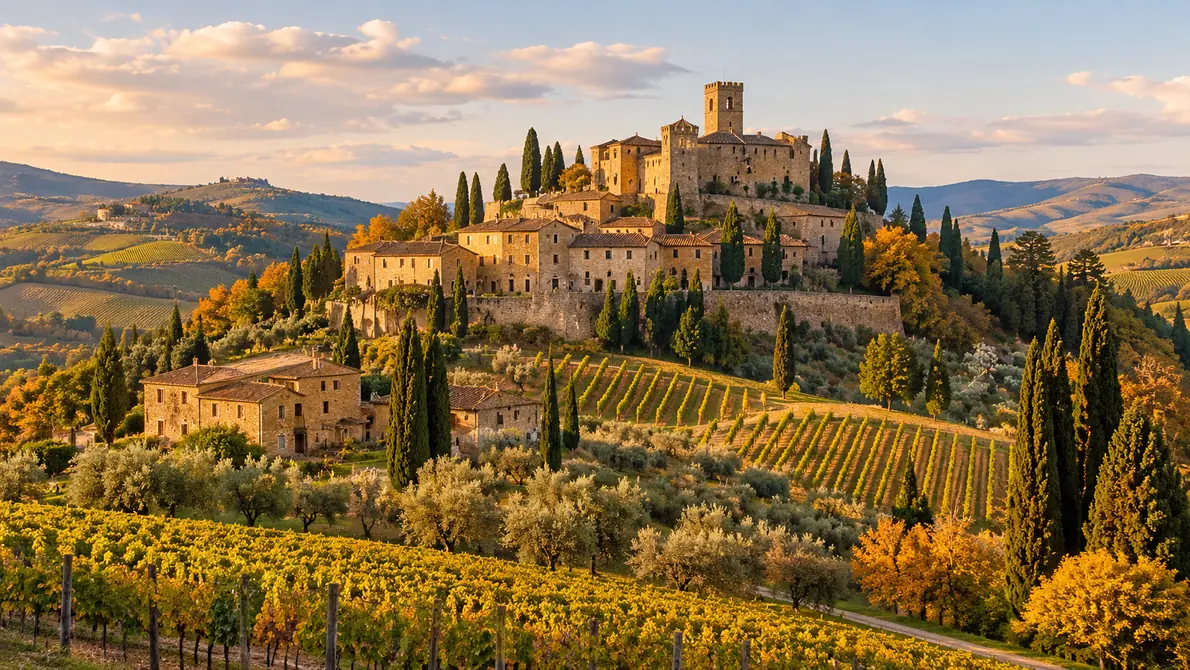
Booking choice: The Chianti wineries tour, from $55 per person. Check dates Tour details
This post follows the Italian wine press through the summer: WineNews on 3 July and 26 August 2026, La Nazione Firenze and QdS (reporting the Regione Toscana) on 6 August, and Panorama on 5 August. Release dates come from the Chianti and Brunello consortia, with Italian Wine Central for the Chianti Classico tiers.
One thing you will not find here is a verdict on the vintage. No consortium had published an end-of-harvest report when we checked, and judging a wine that is still in the tank is a job for next year.
The quick answer
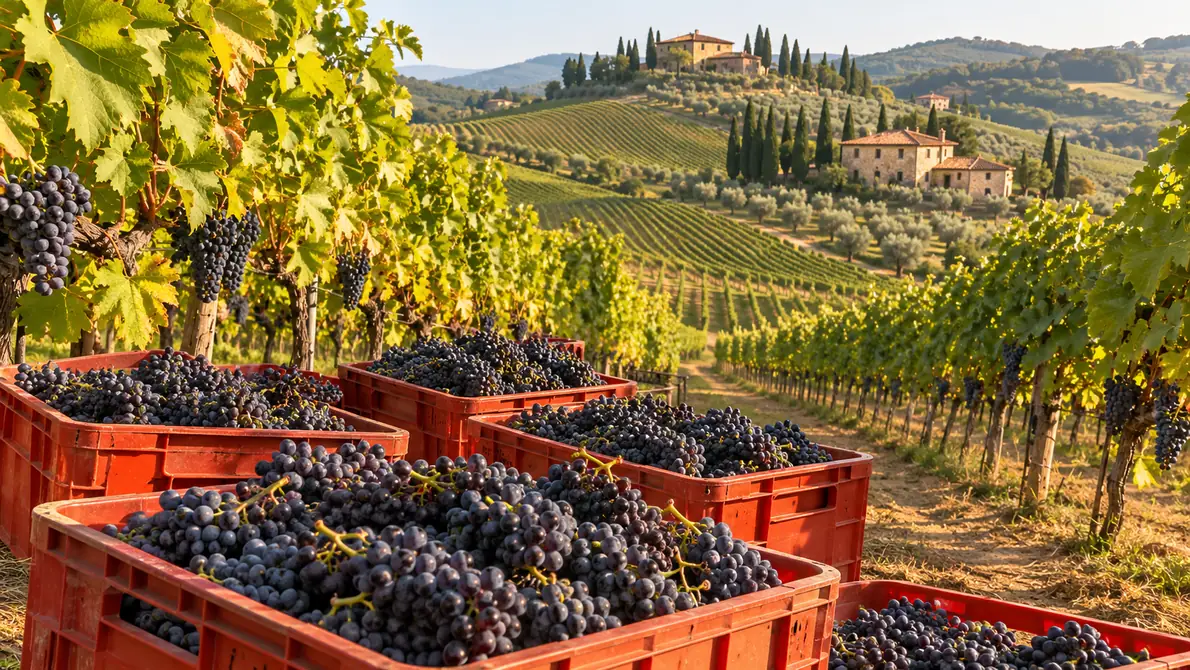
2026 was an early, hot harvest in Tuscany; consortia cut permitted yields. The Regione Toscana approved lower yields for Chianti Classico, Chianti, Brunello di Montalcino and Toscana IGT on 6 August 2026, and the first grapes came in after mid-August. For a visitor the picking is over by now, but the wineries keep pouring all year, and the new wine is resting in their cellars.
How did the 2026 grape harvest go in Tuscany?
Early and hot, with lower yields set in advance. Nobody has rated the vintage yet: the press called it early, and the consortia have not published a final report.
The summer was hot with little rain, which sped up ripening. La Nazione Firenze added the useful detail: heavy rain in winter and spring meant the vines were not under widespread stress. On the national picture, Panorama (5 August) reported a slight drop in volume from the heat and drought, and quoted a Bolgheri producer calling 2026 a solare vintage: sunny and hot.
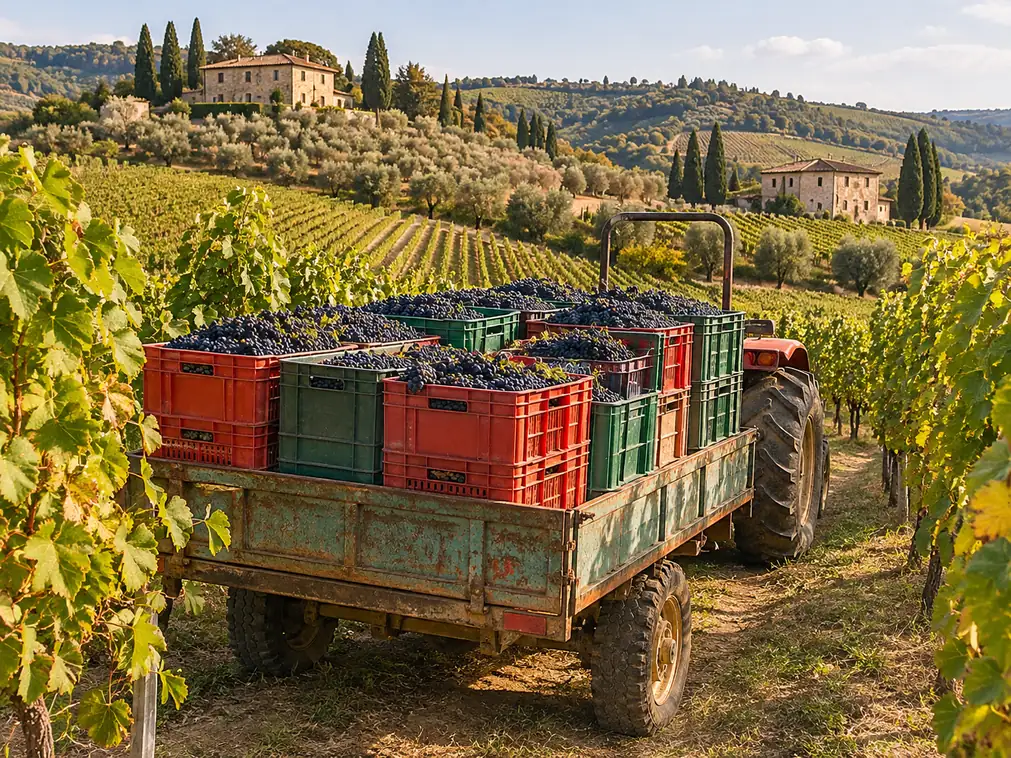
Early harvests were reported across Europe this year, according to WineNews. In Tuscany that meant crates in the rows from the second half of August instead of September.
Why did Tuscan wine consortia cut yields for 2026?
To make less wine at a time when cellars were full. Italian wineries held about 49.1 million hectolitres in stock on 31 May 2026, per WineNews.
On 3 July WineNews listed the requests, consortium by consortium. On 6 August the regional government approved reduced yields for Brunello di Montalcino, Chianti, Chianti Classico and Toscana IGT, each at its consortium's request, QdS reported. Leonardo Marras, the regional assessor, put it simply: Tuscan wine's competitiveness “does not come from the quantity produced”.
A quintal is 100 kilograms of grapes, so a cut from 75 to 65 quintals per hectare means a tonne less fruit on every hectare of Chianti Classico.
| Denomination | Cut asked for (WineNews, 3 July 2026) | Approved on 6 August |
|---|---|---|
| Chianti Classico DOCG | 75 to 65 quintals per hectare, or keep yields and declassify an equal amount from the previous 3 vintages | Yes |
| Chianti DOCG | 20% lower for all categories | Yes |
| Toscana IGT | 20% lower: whites 170 to 136, reds 160 to 128 quintals per hectare | Yes |
| Brunello di Montalcino DOCG | 80 to 70 quintals per hectare (the first hectare excluded) | Yes |
| Vino Nobile di Montepulciano, Bolgheri | No cut planned | Not needed |
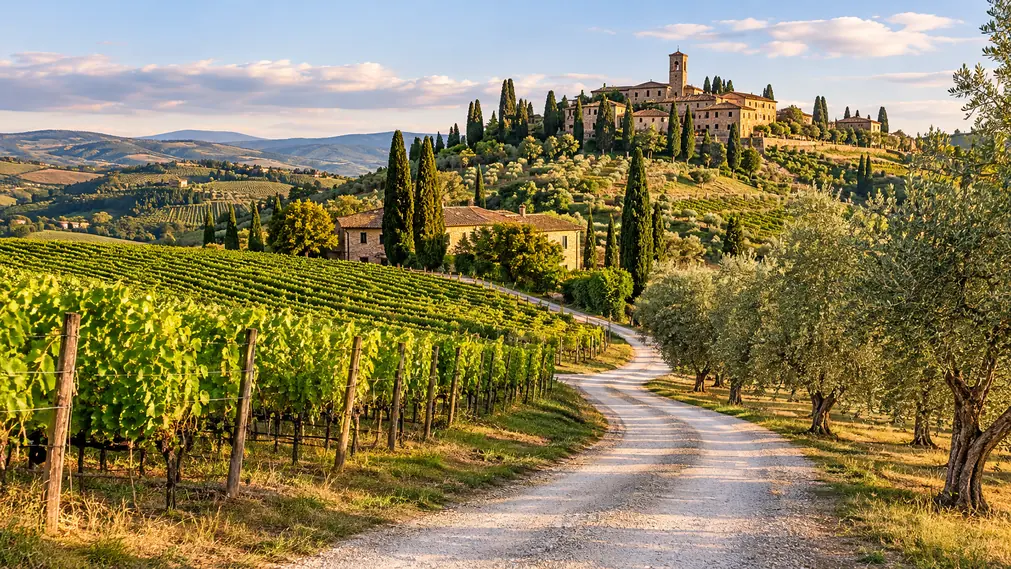
Two family wineries in the Chianti hills, three or four wines at each, with bread, olive oil and salami on the table.
Check dates for the Chianti wineries tourWhen did the 2026 harvest start in Chianti and Montalcino?
After Ferragosto (15 August) in most of Tuscany, about a week early on the coast. In late August Chianti Classico had picked only a few early clusters, with Sangiovese still on the vine.
The coast went first. By 26 August, WineNews reported, Bolgheri was bringing in Merlot and Syrah, while the Brunello harvest in Montalcino was about ten days away. Sangiovese, the grape behind Chianti Classico and Brunello, was still waiting on the vine in the hills between Florence and Siena.
| Date | What happened | Source |
|---|---|---|
| 3 July 2026 | Several Tuscan consortia ask for lower yields before the picking starts | WineNews |
| 6 August 2026 | The Regione Toscana approves the cuts for 4 denominations | QdS |
| 6 August 2026 | Picking not yet started; first grapes expected after Ferragosto (15 August), about a week early on the coast and Elba | La Nazione Firenze |
| 26 August 2026 | Merlot and Syrah under way in Bolgheri; a few early clusters in Chianti Classico, Sangiovese still to come; Brunello about ten days away | WineNews |
Can you still see the harvest on a wine tour in November?
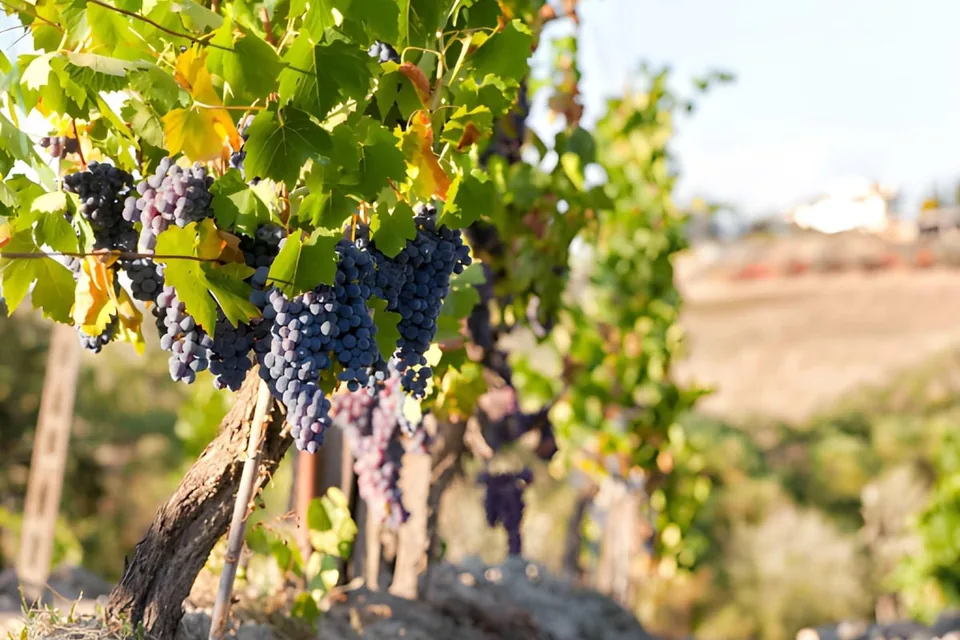
Not the picking. September and October are the peak harvest months, per Lonely Planet, so a tour now shows you the vines after the harvest and the cellars where the 2026 wine is resting.
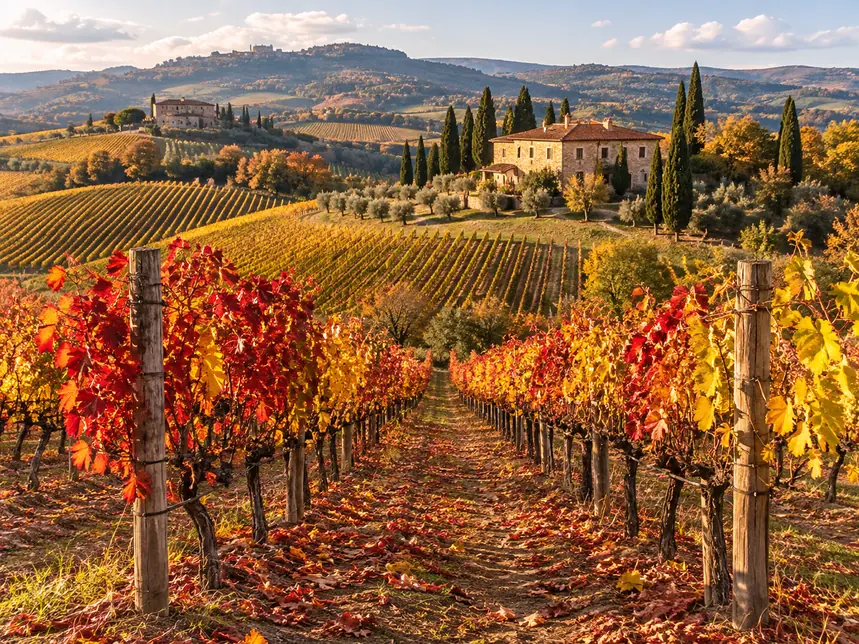
That is a good time to go. July and August are the hottest and busiest months, per Lonely Planet, and by November the vine leaves turn yellow and red. Many farms and cellars offer tastings all year, according to FeelFlorence, the city's tourism site.
Guests on the Chianti wineries tour are still writing home about it. Luciano (Nov 2026): “Wineries were situated in classic panoramic Chianti hillsides.”
Want the harvest itself next year? Plan for September or October, and look at the village festivals: the Festa dell'uva in Vagliagli and the Festa della Vendemmia in Mercatale Val di Pesa fall in harvest season, and Expo Chianti Classico is held in Greve in Chianti on the second weekend of September.
When can you drink the 2026 Tuscan wines?
Chianti from 1 March 2027 at the earliest, Brunello di Montalcino not before 1 January 2031. Each wine has its own release rule, and the dates below are our arithmetic from those rules.
Until then, everything you taste on a tour this winter comes from earlier vintages. The 2026 wine you might see is in steel tanks or oak casks, if the winery shows you its cellar.
| Wine | Release rule | Earliest for the 2026 vintage |
|---|---|---|
| Chianti DOCG | From 1 March after the harvest | 1 March 2027 |
| Rosso di Montalcino DOC | From 1 September of the year after the harvest | 1 September 2027 |
| Chianti Classico Annata | 1 October of the year after the harvest (Italian Wine Central) | 1 October 2027 |
| Vino Nobile di Montepulciano | At least 2 years of ageing from 1 January after the harvest | 1 January 2029 |
| Chianti Classico Riserva | 1 January of the third year (Italian Wine Central) | 1 January 2029 |
| Brunello di Montalcino | 1 January of the fifth year after the harvest | 1 January 2031 |
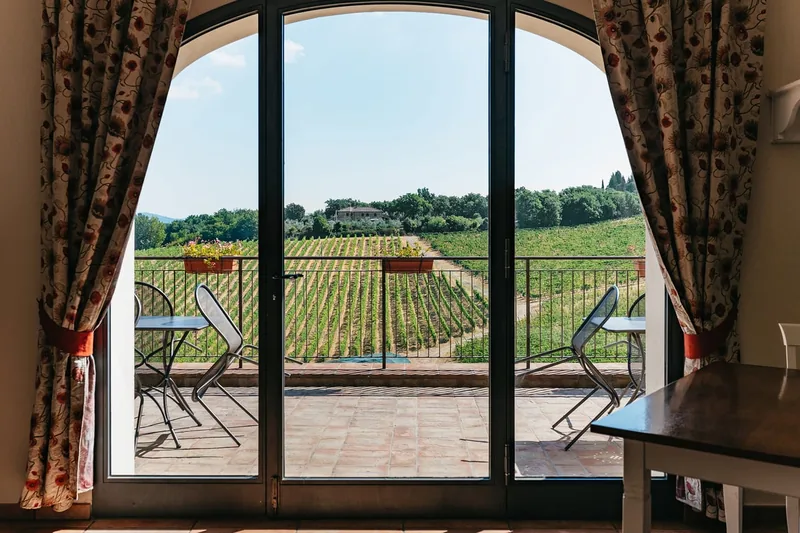
A minibus, a driver-guide and two Chianti Classico estates in 4.5 hours, with wines, olive oils and local produce.
Explore the small-group Tuscany wine tour Tour detailsWhich Florence wine tour suits autumn and winter?
Any tour with transport, since someone else drives. Pick by length and by what is in the glass, and keep the cellar tasting in Florence for a rainy afternoon.
Two notes for this season. On the Chianti e-bike tour, departures from 1 November add a second wine tasting at the CiaoFoodies Hub in Florence after the ride, per the listing, and the tour runs rain or shine. On the Chianti hills half day the vineyard walk depends on the weather, so pack a jacket.
Italy's drink-driving limit is 0.5 grams per litre, and zero for new drivers, one more reason to let a coach or minibus do the driving. Jamie (Oct 2026) on the e-bike day: “I cannot express how much I loved my E bike tour of Chianti! [...] a wonderful lunch.”
| Tour | From | Length | In the glass |
|---|---|---|---|
| Chianti Wineries Tour with Wine Tasting | $55 | 5 to 6.5 hours | 3 to 4 wines at each of 2 wineries, with bread, oil and salami |
| Small-Group Wine Tasting Tour to Tuscany | $100 | 4.5 hours | Wines and olive oils at 2 estates, with local produce |
| Chianti Hills Half-Day Tour with Wine Tasting | $50 | 5 hours | 7 wines at 1 winery, with Tuscan snacks and oil |
| Chianti E-Bike Tour with Lunch & 2 Wine Tastings | $50 | 6 hours | Wines with lunch at a winery, plus a second tasting |
| Wine & Food Tasting in a Florence Wine Cellar | $40 | 1 to 1.5 hours | 3, 5 or 7 wines with cheeses and cold cuts |
Frequently asked questions
Was 2026 a good vintage in Tuscany?
It is too early to say. 2026 was an early, hot harvest in Tuscany and consortia cut permitted yields; no consortium had published a final report on the vintage when we checked.
Why were Chianti Classico yields cut in 2026?
Cellars were full: Italian wineries held about 49.1 million hectolitres on 31 May 2026, per WineNews. The consortium asked to go from 75 to 65 quintals per hectare, and the Regione Toscana approved lower yields on 6 August 2026.
When does the grape harvest happen in Tuscany?
September and October are the usual peak months, per Lonely Planet. In 2026 it started early, with the first grapes after mid-August.
Can I visit Chianti wineries in November and winter?
Yes. Many farms and cellars offer tastings all year, according to FeelFlorence, and the tours from Florence run outside the harvest too; check the dates on each listing.
Ready to book
Choose your tasting
Free cancellation up to 24 hours before on every option. Prices are from-prices in USD and move with the season.
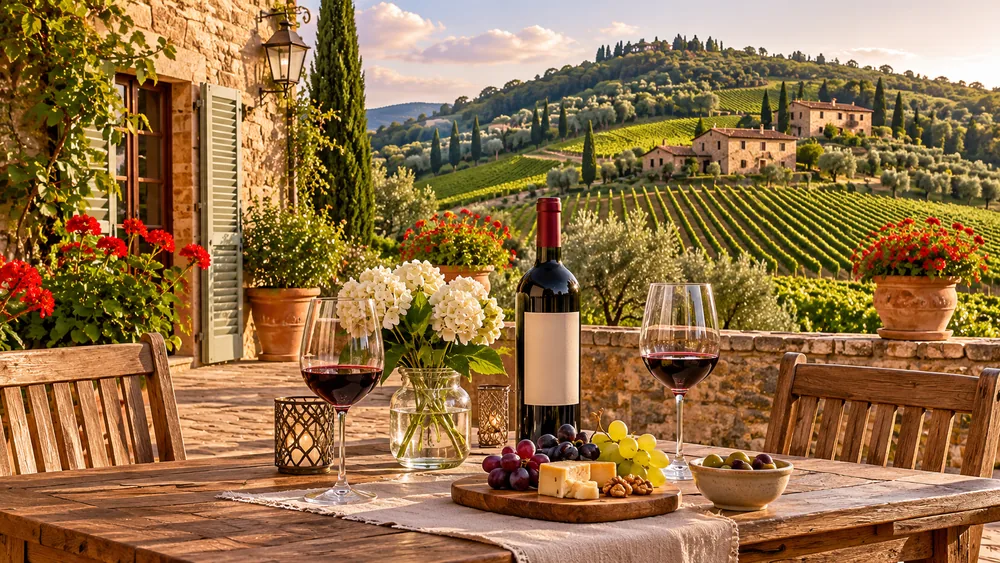
Chianti Wineries Tour with Wine Tasting
- Air-conditioned coach from Florence
- English-speaking tour leader
- Guided tastings at 2 Chianti wineries
Small-Group Wine Tasting Tour to Tuscany
- Air-conditioned minibus from Florence
- Driver-guide
- Guided visits to 2 wine estates
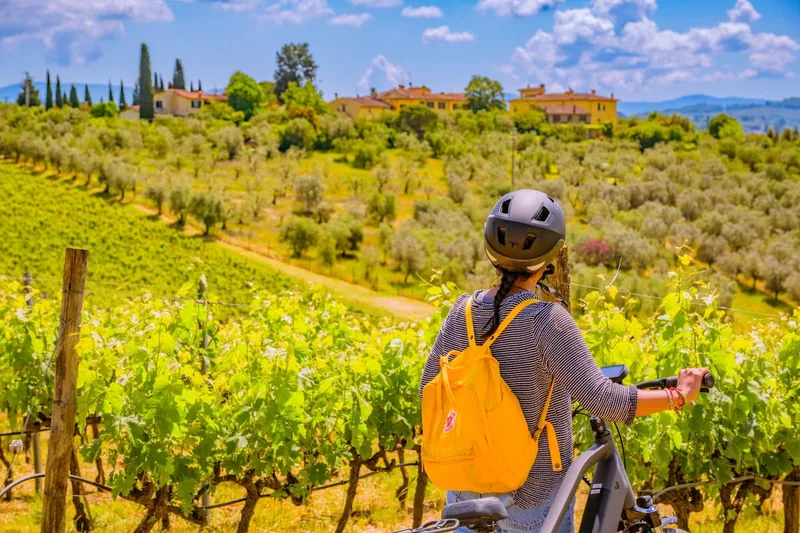
Chianti E-Bike Tour with Lunch & 2 Wine Tastings
Pedal-assisted hills, a winery lunch and two tastings